Top AI Retail Technology Trends and Predictions Shaping the Future of Shopping in 2026
- dBB Global Perspective

- Feb 16
- 4 min read
Artificial intelligence is transforming retail at a rapid pace. By 2026, AI will not just support retail operations but will reshape how customers shop, how stores operate, and how brands connect with consumers. This post explores the key AI trends set to define retail in 2026, offering practical insights and examples that show how technology will create more personalized, efficient and engaging shopping experiences.

AI-Powered Personalisation Will Reach New Heights
Personalisation has been a focus for retailers for years, but AI will take it further by 2026. Advanced machine learning models will analyze vast amounts of customer data in real time to offer highly tailored product recommendations, promotions and content.
Dynamic product suggestions will adjust instantly based on browsing behavior, purchase history and even mood inferred from interaction patterns.
Retailers will use AI to create personalised marketing campaigns that feel natural and relevant, increasing customer engagement and loyalty.
Virtual shopping assistants powered by AI will guide customers through product choices, answering questions and offering advice as if they were in a physical store.
For example, a fashion retailer might use AI to recommend outfits based on a customer’s style preferences, current trends, and even upcoming weather forecasts. This level of personalisation will help shoppers find exactly what they want faster, improving satisfaction and sales.
Automation Will Streamline Store Operations
AI-driven automation will reduce manual tasks and improve efficiency in retail stores. Robots and AI systems will handle inventory management, restocking and checkout processes.
Smart shelves equipped with sensors and AI will monitor stock levels and automatically reorder products before they run out.
AI-powered robots will assist with shelf scanning and product placement, freeing staff to focus on customer service.
Automated checkout systems using computer vision will allow customers to leave the store without waiting in line, as AI tracks items in their cart and charges them automatically.
These technologies will reduce operational costs and errors, while creating a smoother shopping experience. For instance, Amazon Go stores already use AI for cashier-less checkout, and this approach will become more common by 2026.
AI Will Enhance Supply Chain & Inventory Management
Retailers will rely heavily on AI to optimise supply chains and inventory. Predictive analytics will forecast demand with greater accuracy, helping stores stock the right products at the right time.
AI models will analyse factors like seasonality, local events, and social media trends to predict product demand.
Automated warehouses will use AI to manage stock placement and order fulfillment efficiently.
Real-time tracking powered by AI will improve transparency and reduce delays in the supply chain.
Walmart has already invested in AI-driven supply chain tools that reduce waste and improve product availability. By 2026, such systems will be standard, helping retailers avoid overstocking or stockouts.

Voice and Visual Search Will Become Mainstream
Consumers will increasingly use voice commands and images to search for products. AI will power these new search methods, making it easier to find items without typing.
Voice assistants integrated into smartphones and smart home devices will allow shoppers to ask for product recommendations or place orders hands-free.
Visual search tools will let customers upload photos or scan items to find similar products online.
Retailers will optimise their catalogs for voice and visual search to capture this growing demand.
For example, a customer might snap a picture of a chair they like and instantly find similar options from multiple retailers. This convenience will drive more sales and improve the shopping experience.
AI Will Drive Smarter Pricing & Promotions
Dynamic pricing powered by AI will adjust product prices in real time based on demand, competition and inventory levels.
Retailers will use AI to test different pricing strategies and promotions to maximise revenue.
Personalised discounts will target individual customers based on their shopping habits and price sensitivity.
AI will help avoid price wars by analysing competitor pricing and market conditions.
This approach benefits both retailers and customers by offering fair prices and timely deals. For instance, airlines and ride-sharing apps already use dynamic pricing, and retail will follow suit more widely.
Enhanced Customer Service with AI Chatbots and Virtual Assistants
AI chatbots will become more sophisticated, handling complex customer inquiries and providing instant support 24/7.
Natural language processing will allow chatbots to understand context and emotions better.
Virtual assistants will help with product discovery, order tracking, and returns without human intervention.
AI will route difficult issues to human agents with relevant information, speeding up resolution.
Retailers like Sephora use AI chatbots to assist customers with beauty advice and product selection. By 2026, these assistants will be a standard part of the shopping journey.
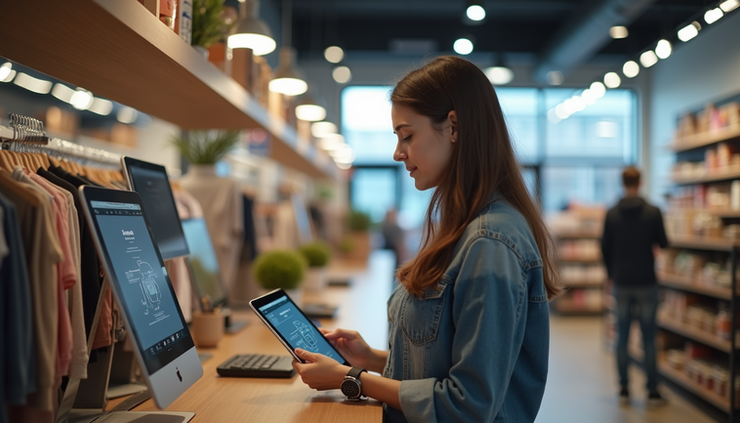
Ethical AI and Data Privacy Will Shape Retail Practices
As AI collects more customer data, retailers will face increased pressure to protect privacy and use AI ethically.
Transparent data policies and clear consent mechanisms will become mandatory.
AI systems will be designed to avoid bias and ensure fair treatment of all customers.
Retailers will adopt AI tools that explain decisions, building trust with shoppers.
Consumers will favor brands that respect their privacy and use AI responsibly. Retailers that fail to do so risk losing customer loyalty and facing regulatory penalties.
Preparing for the AI-Driven Retail Future
Retailers should start investing in AI technologies now to stay competitive by 2026. This means:
Building data infrastructure to support AI applications.
Training staff to work alongside AI tools.
Testing AI solutions in pilot projects before full rollout.
Prioritising customer privacy and ethical AI use.
Shoppers will expect seamless, personalised, and efficient experiences powered by AI. Retailers who deliver on these expectations will thrive in the evolving market.
Looking Ahead
AI is no longer a futuristic concept for retail — it is becoming the very engine of transformation. By 2026, retailers that embrace AI thoughtfully will deliver experiences that are faster, smarter, and more personalized than ever before, while those that hesitate risk falling behind. Success will depend not just on technology, but on balancing innovation with ethical responsibility and customer trust. The future of retail is AI-driven and the time to prepare is now.
“In 2026, AI won’t just support retail — it will define how customers shop, how stores operate, and which brands win their loyalty.”